Important parameters may include:
- Bit profile and geometry
- Overall length
- Shank dimensions
- Tip dimensions
- Hardness
- Surface condition
- Heat-treatment requirements
- Dimensional tolerance
- Material specification
- Batch consistency


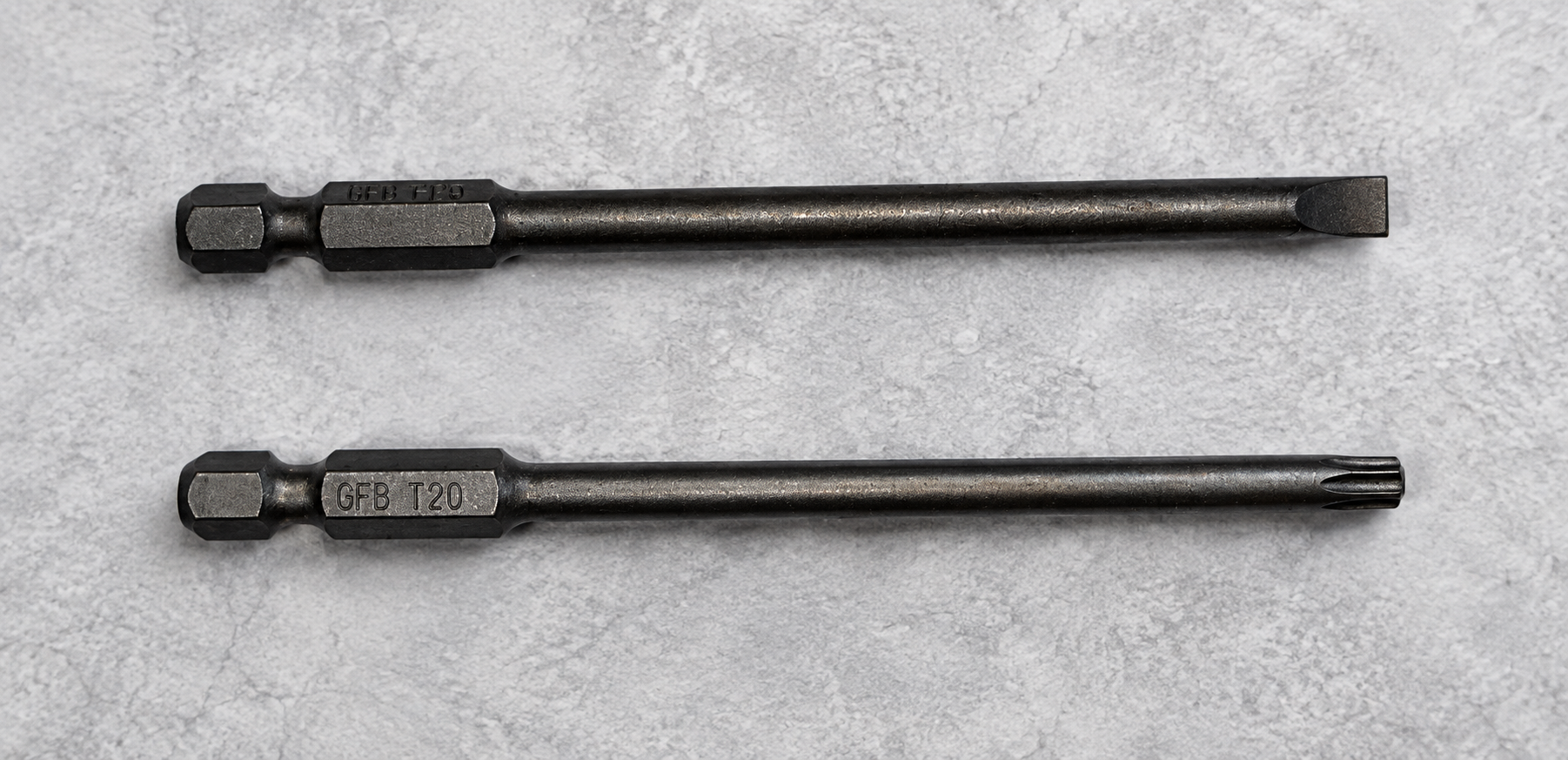
A screwdriver bit may look like a small part of a tool, but the right bit can make a major difference in fastening quality, working speed, and screw life. In manufacturing, assembly, electrical work, automotive applications, furniture production, and general maintenance, different screws require different bit profiles.
Imagine an assembly operator working on a production line. The screw is correct, the power tool is working properly, but the bit does not match the screw head perfectly. The result can be slipping, cam-out, damaged screw heads, uneven fastening, or premature bit wear. This is why choosing the correct screwdriver bit is not simply about finding a bit that fits it is about selecting the right profile, size, material, finish, and manufacturing quality for the application.
Shree Assembly Tools has been manufacturing and supplying screwdriver and fastening tools since 2007, with a strong focus on dependable products for industrial and professional applications. Our range covers All Types of Screwdriver Bits required for different fastening requirements.
Whether you are looking for All Types of Screwdriver Bits in Pune or sourcing screwdriver bits for industrial requirements anywhere in India, the selection should be based on application, screw type, torque requirement, material, and expected service life.
A screwdriver bit is a replaceable driving component designed to fit into a screwdriver, drill driver, impact driver, or suitable bit holder. The working end of the bit is manufactured in a specific shape to match the recess of a screw.
The bit transfers rotational force from the driving tool to the fastener. A properly matched bit provides better contact with the screw head and helps reduce slipping and premature wear.
Screwdriver bits are available in different profiles, sizes, lengths, materials, coatings, and drive configurations. The most suitable option depends on the screw being used and the conditions in which fastening will take place.
For example, a standard Phillips bit may be suitable for general assembly, while a Torx bit can be preferred where higher torque transmission is required. Security profiles are used where unauthorized removal needs to be restricted, while precision bits are suitable for small electronic components.
Different industries use different fastening systems. Our range of screwdriver bits can be produced in commonly required profiles as well as application-specific configurations.
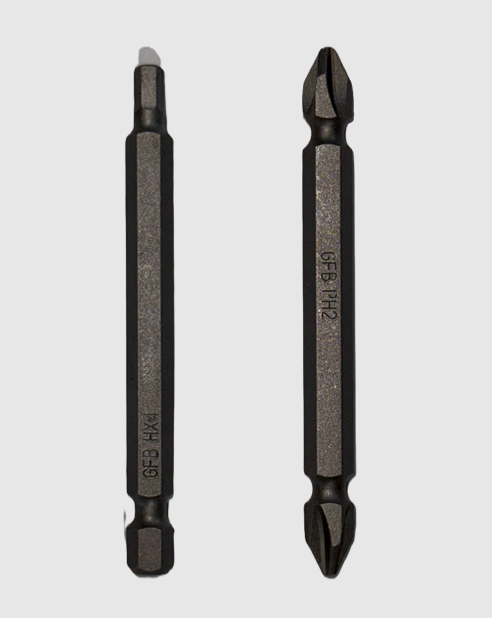
Phillips bits have a cross-shaped driving profile and are among the most widely used screwdriver bits. They are commonly found in general assembly, electrical products, appliances, furniture, machinery, and maintenance work. Common sizes include PH0, PH1, PH2, PH3, and PH4, depending on the screw specification. PH2 is one of the most commonly encountered sizes for general fastening, but the correct size should always be selected according to the screw head.
Pozidriv bits have a cross-shaped profile with additional contact points between the main grooves. They are widely used in furniture, woodworking, construction, and industrial assembly. PZ bits should not be confused with Phillips bits. Although the profiles look similar, using the wrong bit can result in poor engagement and damage to the fastener.
Slotted bits have a straight, flat driving edge and are designed for screws with a single straight recess. They are still widely used in electrical equipment, traditional hardware, furniture, machinery, and maintenance applications. The correct blade width and thickness are important because an undersized bit can easily slip inside the screw slot.
Torx bits have a six-point star-shaped profile. Their geometry provides multiple contact points between the bit and fastener, making them suitable for applications requiring reliable torque transmission. Torx bits are commonly used in automotive components, machinery, electronics, furniture, appliances, and industrial equipment. Typical sizes include T10, T15, T20, T25, T27, T30, T40, and other sizes depending on the application.
Security Torx bits are similar to standard Torx bits but have a hole through the center of the tip. They are designed for screws containing a central security pin. These bits are commonly used in electrical equipment, appliances, electronic products, public equipment, and applications where tamper resistance is required.
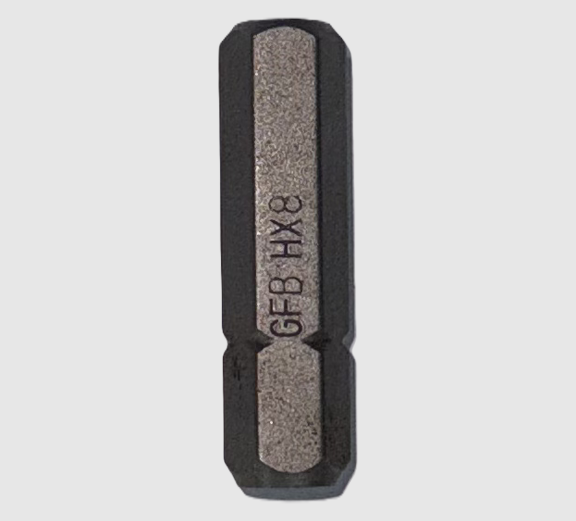
Hex bits have a six-sided profile and are commonly used with hex socket screws. They are found in furniture, machinery, automotive components, bicycles, equipment assembly, and maintenance applications. Both metric and inch sizes can be produced depending on customer requirements.
Robertson bits, also known as square bits, have a square-shaped driving profile. They provide good engagement with compatible square-drive screws and are particularly common in woodworking, furniture, construction, and certain industrial applications.
Tri-Wing bits have a three-wing profile and are mainly used with specialized fasteners. They are commonly associated with electronic equipment, appliances, gaming devices, and other products where specialized screws are used.
Spanner bits, sometimes called U-type security bits, have two contact points designed for screws with two holes in the head. They are generally used for security applications, electronic equipment, appliances, and specialized assemblies.
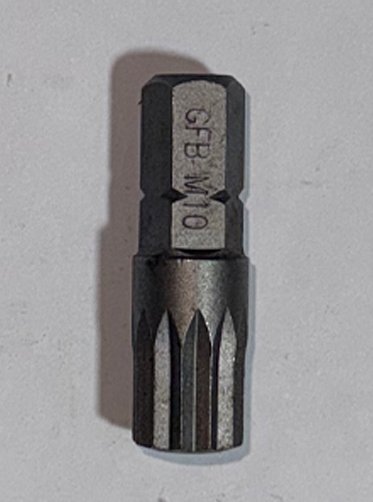
Depending on customer requirements, screwdriver bits can also be manufactured in specialized profiles such as Torq-Set, Tri-Point, Pentalobe, Ribe, XZN/Spline, and other application-specific designs.
The final specification of a screwdriver bit depends on the screw profile, application, driving equipment, and customer requirement.
For industrial applications, specifications should be finalized according to the fastener drawing, screw material, torque requirement, driving tool, and expected working conditions.
The material of a screwdriver bit directly influences hardness, toughness, wear resistance, and service life.
S2 tool steel is widely used for high-performance screwdriver bits because it offers a useful combination of hardness, toughness, and impact resistance after appropriate heat treatment.
It is particularly suitable for demanding fastening applications and power-tool use where the bit experiences repeated torque and impact.
Chrome vanadium steel is a commonly used alloy steel for screwdriver and hand-tool applications. It provides good strength, hardness, and wear resistance for general-purpose fastening work.
Cr-V can be suitable for standard screwdriver bits and applications where extreme impact resistance is not the primary requirement.
Cr-Mo steel contains chromium and molybdenum and is known for its strength and toughness. Depending on the design and heat-treatment process, it can be used for applications requiring improved mechanical performance.
The correct material is selected according to the bit design, application, torque level, and customer specification rather than using the same material for every application.
The correct material is selected according to the bit design, application, torque level, and customer specification rather than using the same material for every application.
For industrial screwdriver bits, dimensional consistency and manufacturing control are important because even a small variation in the working profile can affect engagement with the fastener.
Production specifications can be controlled according to customer drawings, agreed technical specifications, applicable dimensional requirements, and industry practices.
Important parameters may include:
For OEM and industrial requirements, technical drawings and agreed specifications can be used as the basis for production and inspection.
All Types of Screwdriver Bits are used across a wide range of industries and working environments.
Torx, Hex, Ribe, XZN, Phillips and other profiles are commonly required for automotive assembly and maintenance.
Precision Phillips, Torx, Security Torx, Tri-Wing, Tri-Point, Pentalobe, and other specialized profiles are used for electrical and electronic products.
Phillips, Pozidriv, Slotted, Hex and Square bits are commonly used for furniture manufacturing, installation and assembly.
Industrial equipment often requires high-strength bits capable of handling repeated fastening operations and controlled torque.
Impact-compatible Phillips, Torx, Hex, and Square bits are widely used for construction and structural fastening applications.
Appliances can use standard as well as security screw profiles depending on the product design and assembly requirements.
Maintenance teams often require a combination of common and specialized screwdriver bits to handle different fasteners encountered during repair work.
A reliable screwdriver bit starts with controlled raw material and continues through several manufacturing stages.
The first stage is checking the incoming material. Material type, dimensions, surface condition, and other required parameters are verified before production.
Selecting the correct steel is important because the final bit must balance hardness with toughness. A bit that is excessively hard but lacks sufficient toughness may become brittle, while inadequate hardness can lead to rapid tip wear.
The selected steel is cut into suitable blanks according to the required bit dimensions. Proper preparation helps maintain consistency during subsequent forming and machining operations.
The required tip profile is produced according to the selected design. Phillips, Pozidriv, Torx, Hex, Square, and security profiles each require their own geometry.
Precision at this stage is important because the working tip must engage correctly with the screw recess.
Heat treatment is one of the most important stages in screwdriver bit manufacturing. The process is controlled according to the selected steel grade and required mechanical properties.
The objective is to achieve the required combination of hardness, strength, and toughness.
Depending on the product specification, surface finishing or coating may be applied to improve corrosion resistance, appearance, friction characteristics, or wear performance.
Finished bits are checked for dimensions, profile accuracy, surface condition, hardness, and other agreed specifications before packing.
A screwdriver bit may look simple, but its performance depends heavily on dimensional accuracy and material properties.
Quality inspection can include:
The purpose of inspection is not only to identify defective products. Consistent inspection also helps maintain repeatable quality from one production batch to another.
Compare different screwdriver bit profiles, their main advantages, and common applications.
| Bit Type | Profile | Main Advantage | Common Applications |
|---|---|---|---|
| Phillips PH | Cross | Widely available and versatile | General Assembly, Furniture, Electrical |
| Pozidriv PZ | Modified Cross | Better engagement with PZ screws | Furniture, Woodworking, Construction |
| Slotted | Straight | Simple and widely compatible | Maintenance, Electrical, Traditional Hardware |
| Torx T | Six-Point Star | Good torque transmission | Automotive, Machinery, Electronics |
| Security Torx | Star with Center Hole | Suitable for Security Screws | Appliances, Electronics, Equipment |
| Hex | Six-Sided | Reliable engagement | Machinery, Furniture, Automotive |
| Square | Square | Good screw retention | Woodworking, Furniture, Construction |
| Tri-Wing | Three-Wing | Specialized fastening | Electronics and Appliances |
| Spanner | U-Shaped | Security-oriented design | Electronics and Specialized Equipment |
Selecting a screwdriver bit manufacturer is about more than product availability. For industrial buyers, consistency, technical understanding, material selection, and production control are equally important.
Shree Assembly Tools has been serving the tool industry since 2007, bringing more than 25 years of combined industry experience and practical understanding of fastening requirements.
Our focus is on producing screwdriver bits according to application requirements rather than treating every fastening job in the same way.
More than 25 years of industry experience
Manufacturing and supply of screwdriver and fastening tools
Multiple standard screwdriver bit profiles
Material options based on application
Custom sizes and profiles as required
Production based on customer specifications
Quality inspection at different production stages
Support for industrial and OEM requirements
Consistent attention to dimensional accuracy and product quality
For buyers searching for All Types of Screwdriver Bits in Pune, the right supplier should be able to understand both standard and application-specific requirements.
For customers sourcing All Types of Screwdriver Bits in India, technical specifications, material selection, quality consistency, and supply capability are important factors to consider before placing an order.
The commonly used types include Phillips, Pozidriv, Slotted, Torx, Security Torx, Hex, Square or Robertson, Tri-Wing, Spanner, and several specialized profiles.
There is no single material that is best for every application. S2 tool steel is commonly selected for applications requiring good toughness and impact resistance, while Cr-V and Cr-Mo steels can be suitable for different general and industrial applications.
Both have a cross-shaped appearance, but Pozidriv has additional grooves that provide a different engagement pattern. Phillips and Pozidriv bits should not be interchanged because using the incorrect profile can damage the fastener.
Yes. Depending on the manufacturing capability and application requirement, screwdriver bits can be developed according to specified profiles, dimensions, lengths, materials, and technical drawings.
Impact-rated bits should be selected for impact-driver applications. The material, heat treatment, geometry, and construction should be suitable for repeated impact and high-torque loading.
Start by identifying the screw-head profile. Then select the correct size and confirm that the bit sits properly inside the screw recess without excessive movement. For power tools, also consider the torque level and whether the bit is suitable for impact use.
Yes. Screwdriver bits are widely used in automotive, machinery, electronics, furniture, electrical, construction, appliance manufacturing, and general industrial assembly.
The right screwdriver bit can improve fastening accuracy, reduce screw-head damage, and help maintain consistent assembly quality.
If you need All Types of Screwdriver Bits for industrial, OEM, assembly, maintenance, furniture, automotive, electrical, or other applications, share your required bit profile, size, length, material, quantity, and technical drawing if available.
Shree Assembly Tools can help you identify a suitable screwdriver bit specification and discuss your manufacturing or bulk-supply requirement.
Contact us today to request a quotation or discuss your screwdriver bit requirement with our technical team.